SynMax Research:
SynMax Vulcan Confirms Stargate Abilene Unit 1 & Unit 2 Operational; Thermal Drone Analysis and Unit 3-4 Construction Update
Facility: Stargate Site 1, Lancium Clean Campus, Abilene, Texas
Operator: Crusoe Energy Systems
SynMax Vulcan's satellite monitoring and thermal drone analysis confirm that Unit 1 and Unit 2 at the Stargate Abilene data center campus are fully operational. As reported by Crusoe, the facility officially became operational on September 30, 2025. However, per Industrial Information Resources (IIR), both units came online earlier on July 31, 2025, representing the first 240 MW (120 MW each) of what will become a 1.2 GW AI compute facility. Thermal imagery captured during SynMax drone operations reveals elevated thermal signatures across all cooling infrastructure, providing definitive evidence of live AI workloads running on NVIDIA GB200 NVL72 Blackwell GPUs.
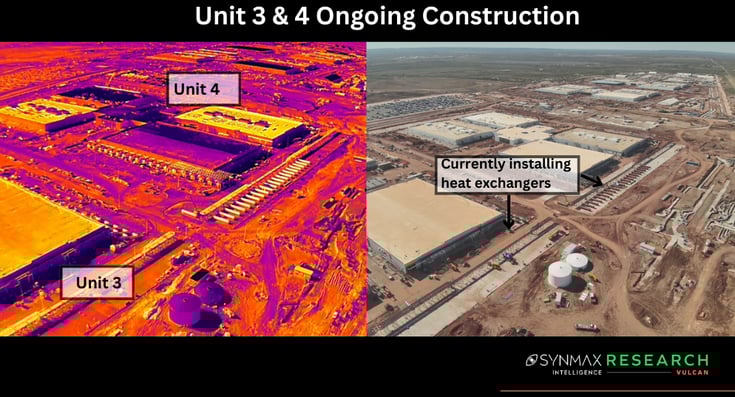
Meanwhile, construction continues at an aggressive pace on Units 3 & 4, with heat exchanger installation now underway. SynMax Vulcan is continuously monitoring this progress and will provide updates as these units approach energization, expected by mid-2026.
Facility Overview
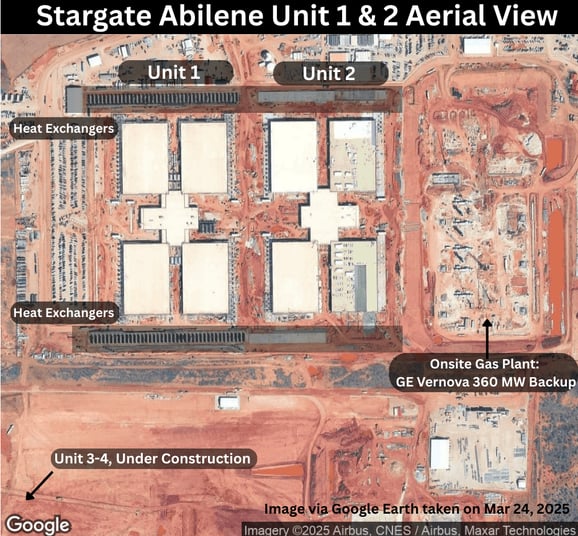
The Stargate Abilene campus represents the flagship site of the $500 billion Stargate initiative—a joint venture between OpenAI, Oracle, and SoftBank to build the largest AI data center network in U.S. history. Crusoe Energy Systems is developing the physical infrastructure on approximately 900 acres at the Lancium Clean Campus.
Key Specifications:
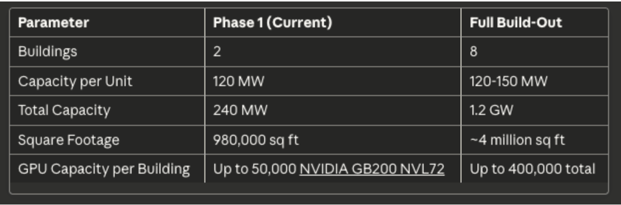
GPU specifications per Crusoe official announcement, March 2025
Thermal Drone Analysis
Why Heat Exchangers Matter
Heat exchangers are the thermal signature that distinguishes an energized building from one actively running AI workloads. When GPUs process training or inference operations, they generate substantial heat that must be continuously rejected.
The Abilene facility employs direct-to-chip liquid cooling with a zero-water evaporation closed-loop system. According to Crusoe's official specifications, the facility features "direct-to-chip liquid cooling via a zero-water evaporation cooling system that continuously recirculates water through a closed-loop system."
As detailed in Crusoe's facility overview, "Water in the systems is continuously recirculated, with heat rejected via air-cooled chillers, so the facility does not consume any water as part of the heat-rejection process."
In this architecture, coolant circulates directly onto Blackwell GPU cold plates, absorbing heat from compute operations, then transfers that thermal energy to the atmosphere via external heat exchangers (dry coolers). This design enables the extreme rack densities required for up to 50,000 NVIDIA GB200 NVL72 units per building while minimizing water consumption in the arid West Texas environment.
Elevated thermal signatures at heat exchangers = active compute.
Cold heat exchangers = idle or offline.
This makes thermal imaging the definitive method for confirming operational status—more reliable than power interconnection records alone, which might indicate energization without actual workload activity.
Unit 1 Analysis
Status: Operational since July 31, 2025 (As reported by IIR)
Capacity: 120 MW
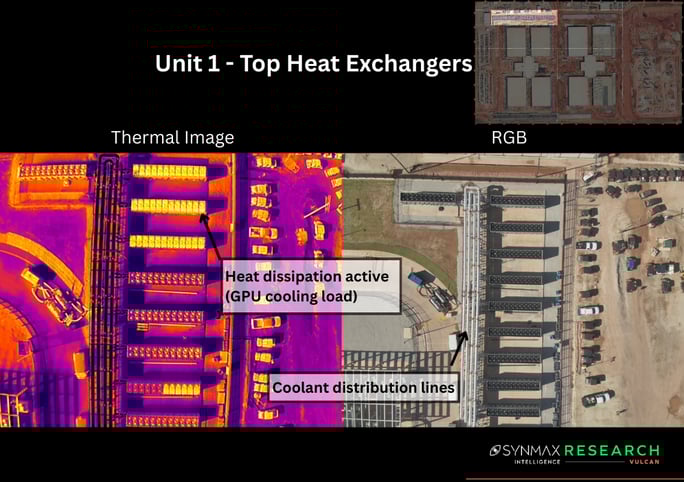
SynMax thermal drone analysis of Unit 1 heat exchangers reveals:
Top Section Heat Exchangers:
- All heat exchanger modules displaying consistent elevated thermal signatures (bright yellow-orange in thermal imagery)
- This indicates active heat dissipation; coolant returning from the data hall is carrying heat from GPU operations
- The uniform thermal profile across all modules confirms balanced cooling load
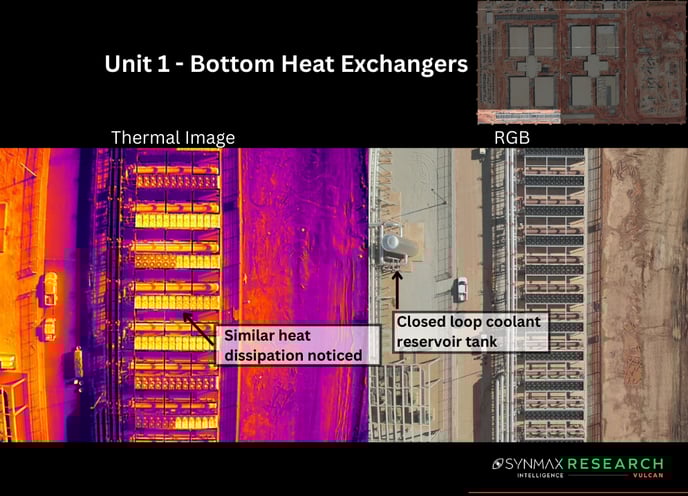
Bottom Section Heat Exchangers:
- Identical heat dissipation to top section
- Coolant reservoir tank (curved structure) visible, part of the closed-loop pressure management system
Unit 2 Analysis
Status: Operational since July 31, 2025 (As reported by IIR)
Capacity: 120 MW
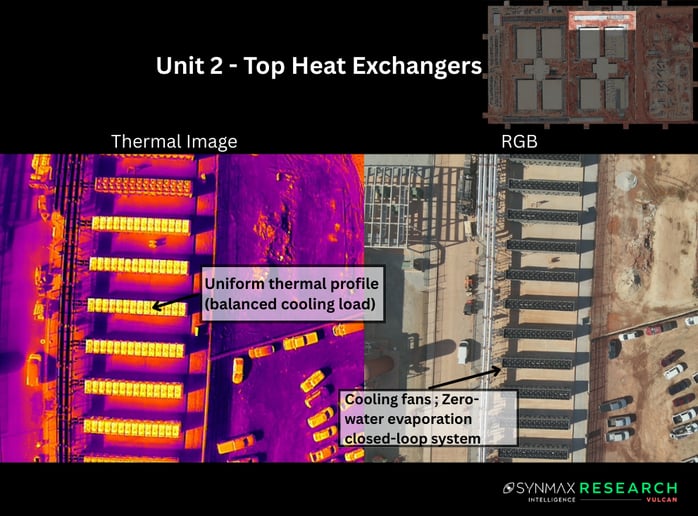
SynMax thermal drone analysis of Unit 2 heat exchangers reveals:
Top Section Heat Exchangers:
- Identical thermal profile to Unit 1, with all modules showing elevated temperatures
- Uniform thermal signature indicates balanced load distribution across the building's compute infrastructure
- Support equipment (pumps and controls) also visible with thermal activity
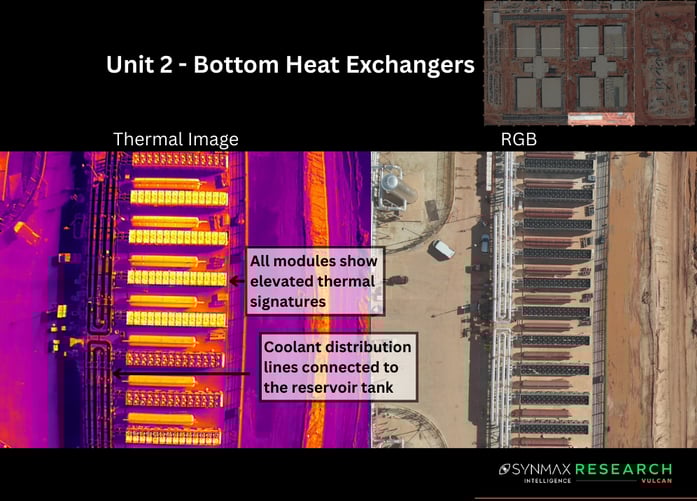
Bottom Section Heat Exchangers:
- All modules running at elevated temperatures
- Coolant reservoir tank (white cylindrical structures in RGB imagery) visible
On-Site Gas Plant Analysis
Capacity: 360 MW
Equipment: GE Vernova gas turbines
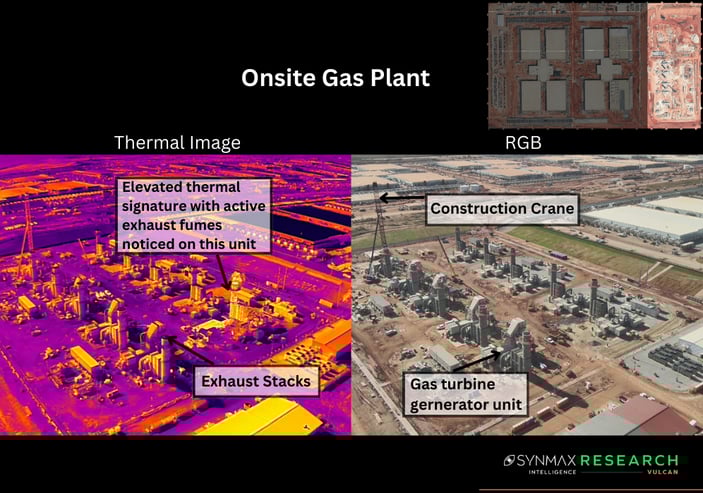
Adjacent to the operational data center buildings, SynMax imagery confirms the presence of the 10 on-site natural gas power plant generator units with one generator unit showing active fumes from the exhaust stack. Per industry reporting, the facility includes 360 MW of on-site natural gas turbines for firm backup power. Bloomberg reporting confirms these are GE Vernova turbines.
For a facility running 24/7 AI training workloads on hundreds of megawatts of NVIDIA GB200 NVL72 GPUs, this power redundancy is critical. Any interruption to cooling or power would risk thermal damage to GPU infrastructure worth billions of dollars.
Unit 3 & 4 Construction Progress
Status: Under Construction
Target Energization: Mid-2026
SynMax Vulcan's continuous monitoring reveals significant progress on the second phase of development.
Current Status:
- Heat exchanger modules are now being staged and installed at Unit 3 & 4 locations
- The distinctive rectangular cooling arrays are visible in the imagery, arranged in the same configuration as the operational units
SynMax Vulcan will continue monitoring Unit 3 & 4 heat exchanger installation progress. The first elevated thermal signatures from these units will indicate the beginning of commissioning activities - likely appearing as intermittent or partial heat dissipation as systems are tested before full operational handover.
SynMax Vulcan Monitoring Capabilities
This analysis demonstrates SynMax Vulcan's comprehensive approach to data center infrastructure monitoring:
- Satellite Imagery: Tracks construction progress from first structure and land clearing through building completion
- Thermal Drone Analysis: Confirms operational status through thermal signature analysis
- Timeline Tracking: Documents key milestones including ground-breaking, structure completion, and energization dates
- Capacity Verification: Cross-references announced capacity figures against observed infrastructure
For the Stargate Abilene campus, SynMax Vulcan has tracked this project from initial land clearing through current operations, providing clients with ground-truth intelligence on one of the most significant AI infrastructure deployments in history.
Report prepared by SynMax Intelligence using Vulcan satellite monitoring platform and thermal drone analysis.
EIA-860M Update: New Capacity, Coal Retirement, and Project Longevity
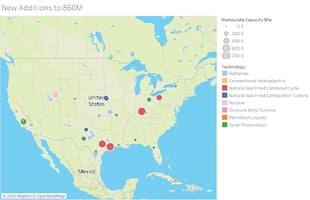
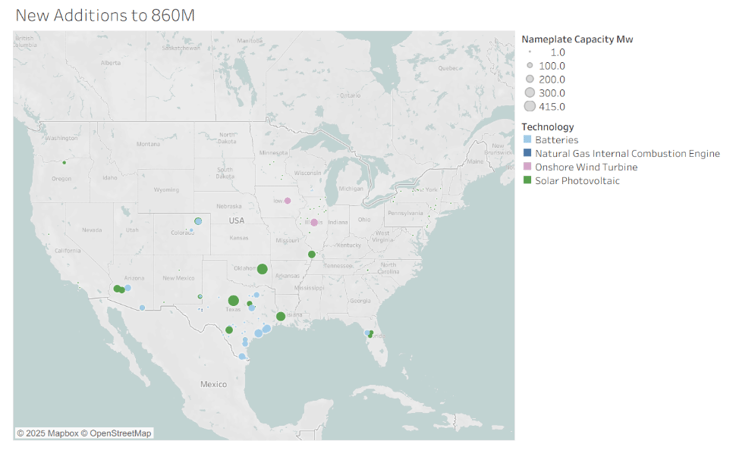
Another month brings another EIA-860M update. This month, the filing added over 5 GW of new projects, mainly in the South, consisting entirely of renewables and batteries.
Key Cancellation in Capacity and Retirements
The latest EIA-860M shows two big changes in terms of generation drops:
- Coal Retirement: The filing shows the retirement of one of the coal units at the Intermountain Power Project in Utah (820 MW). We are currently working to confirm this retirement.
- Solar Cancellation: A large solar project in South Texas (617 MW) has been canceled. The project's ranking was 2.7, which is higher than we prefer, but still places it in the bottom 40% of projects. As noted previously, the range of canceled projects in any given month is typically between 20% and 40%.
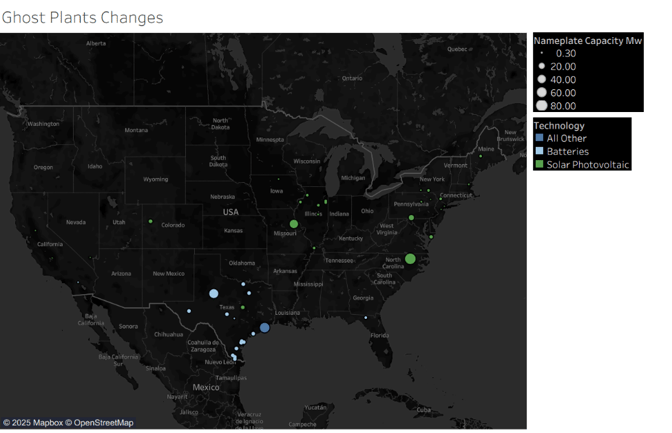
Numerically, there were quite a few "ghost projects" (46 units)—projects appearing for the first time in the EIA-860M as operational. However, these were generally small, totaling under 500 MW.
Project Longevity and Tracking
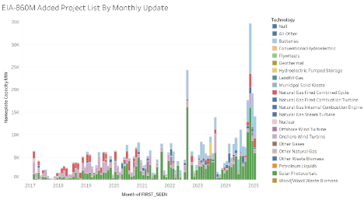
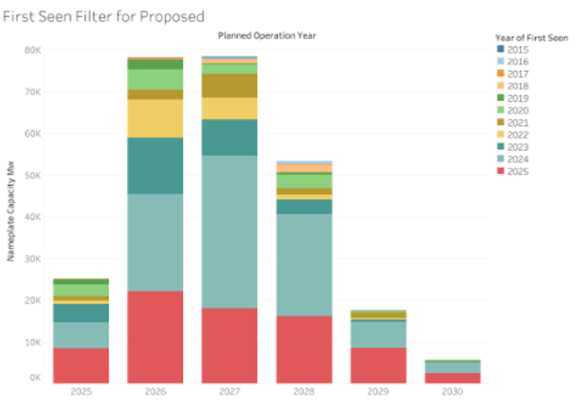
With our First Seen column tracking for the EIA-860M, we can monitor how long a proposed project has been in progress. Based on the latest data, most of the newly listed projects have been in progress for the last three years.
The older projects are certainly becoming suspect in terms of completion. Over 50 GW of proposed projects are older than 2023 proposals, with over half being solar, and the remainder an even split between battery and wind, along with a small amount of gas.
Vulcan continues to innovate and add value to our clients on the platform. For a demo please reach out to our Lead Researcher David Bellman dbellman@synmax.com