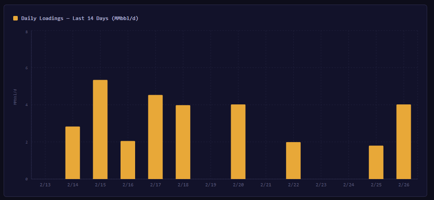
As we noted in this email, we recently made significant updates to how we acquire and process...
A few months ago, we noticed that our third-party sources of well data were problematic in some ways. Though the fundamental data was mostly correct, and the permit counts were 99% complete, it often had failures during collection, or would miss later minor revisions, etc. We started a comprehensive effort to gather all of this information from all states directly, and to replace the vendors in our processes. This initiative is about taking greater control of our data inputs so we can raise the bar on accuracy and completeness — and, as detailed below, there are some corresponding updates. These changes will be effective 24 Mar, but most will not be visible to you until 26 Mar with the updated DUC counts.
What Hasn't Changed?
As alluded to above, we have been confident for a while in our total new permit/well count (though see below for a small problem that this corrected). We have multiple vendor sources for that data, and we have been cross-checking this data with our own collections as we complete them, so we are quite confident in the basics - this permitted well is in this location, etc. We are also fundamentally confident in the number of rigs, crews and number of completions. That hasn't changed.
What Has Changed?
In most cases, the dates for spuds or completions have changed little (though, see below for a few areas where they did). What has changed substantially is our ability to find/detect vertical wells, injection wells, expired wells, and wells that have been plugged & abandoned. As a reminder - we monitor all wells for drilling and completion activity. However, vertical, directional & injection wells rarely have completion activities, so will not show a completion date. That is by design in our monitoring - we don't want to miss any activities, especially if the classifications could be in error. (i.e. Type 1 errors, or "False Positives" are ok in monitoring for Rigs and Crews - though we really only want to count rigs and crews for wells that can produce, we are ok overcounting so that we don't miss any.)
But for counting DUCs, this issue presents a different problem. In this case we are trying to estimate the production "inventory" that is available, and non-horizontal, non-producing wells are supposed to be excluded. Until now, if there was a classification error (usually the well would be "Unknown", or not classified at all), we erred on the side of caution, counting the well as a DUC until it ended up aging out. The same was true of P&A wells. Now that we are getting better, more comprehensive data on wells, we are able to detect many of these up front - and exclude them from the beginning.
Another common theme, seen in many subregions, is inaccuracies in older completion dates. Since we believe the state data as soon as it comes in over our satellite dates, any changes in the older data will change historic counts. This is responsible for a significant increase in the more-distant past for many regions.
We also corrected how our two-year aging rule was applied historically. Previously, our DUC count on any past date only included wells that eventually received a completion date — wells that never completed were excluded retroactively because their spud date had since exceeded the two-year window back from today. This meant past DUC counts were artificially low.
Example: On Feb 2, 2024, a well spudded on Jan 15, 2024 with no completion date should (and would) have counted as a DUC. Under the old method, it wouldn't appear in today's count for that historic date of Feb 2, 2024 because it's now more than two years old with no completion. Under the corrected method, it's included as of any date where it would have legitimately been in the DUC inventory.
This correction produces increases in historical DUC counts across most subregions, though in most cases it's a much smaller effect compared to the trajectory classification improvements described above.
Finally, there are a few thousand wells for which the operators change. Though we have always made an effort to map operator names for M&A activity, it's nearly impossible to do that for property acquisitions and divestments. In this case, grabbing the data ourselves has updated ownership for a handful of wells (relative to the total).
Important Areas Show Little Change
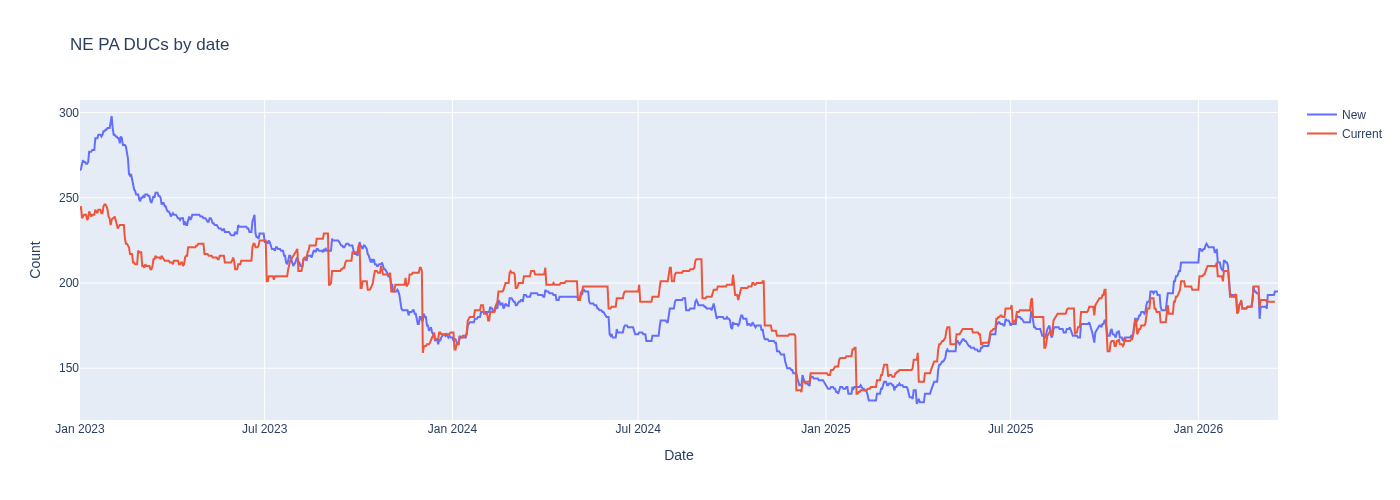
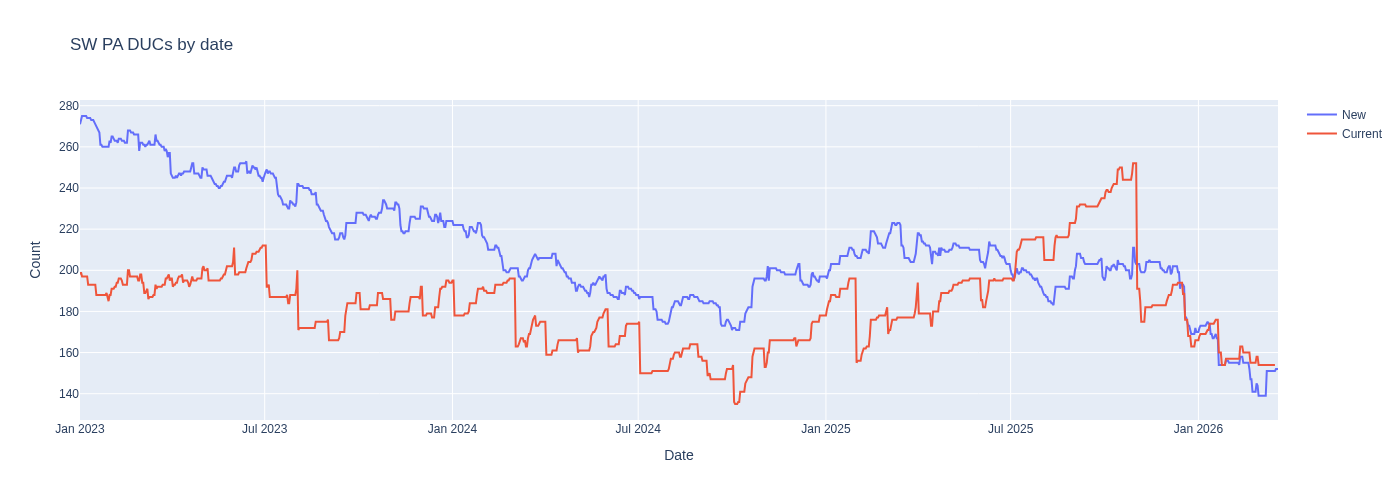
The following areas, all with critical activity, show little change in final level, or recent trajectory.
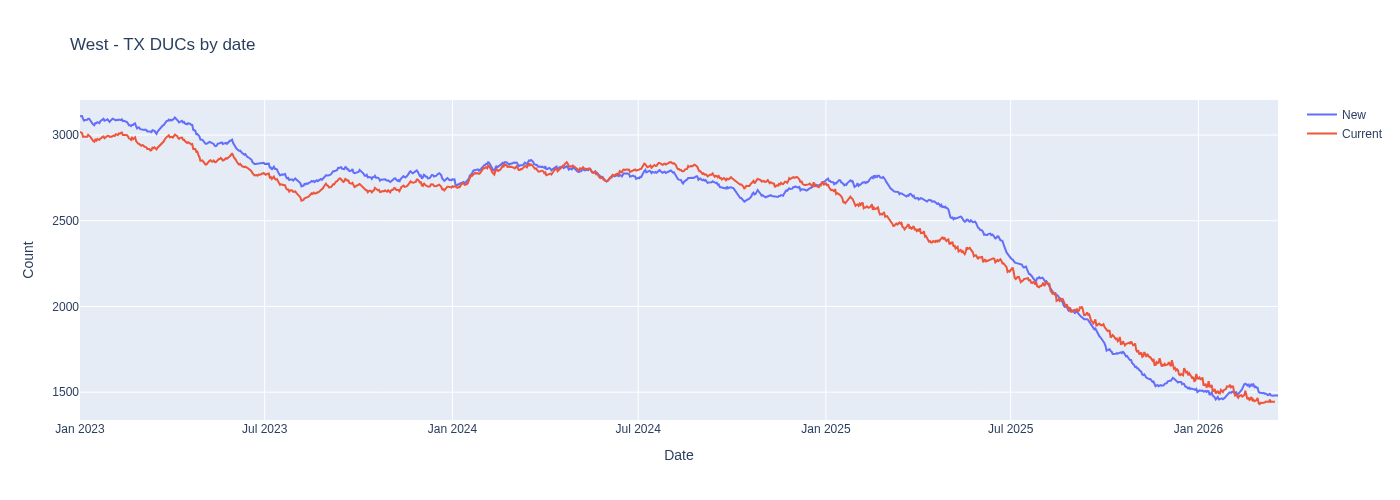
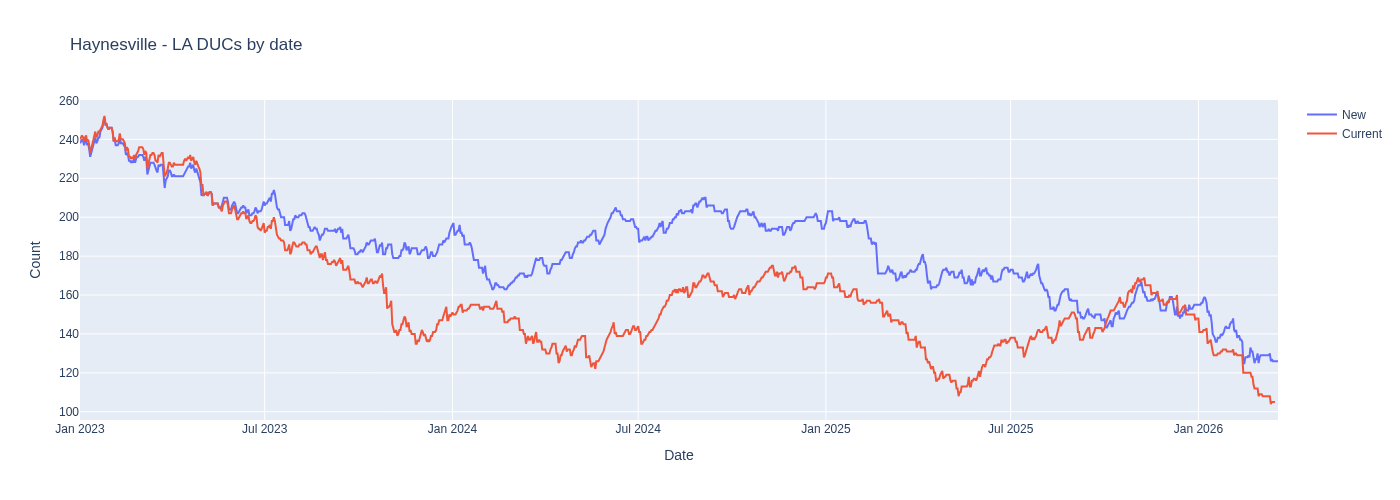
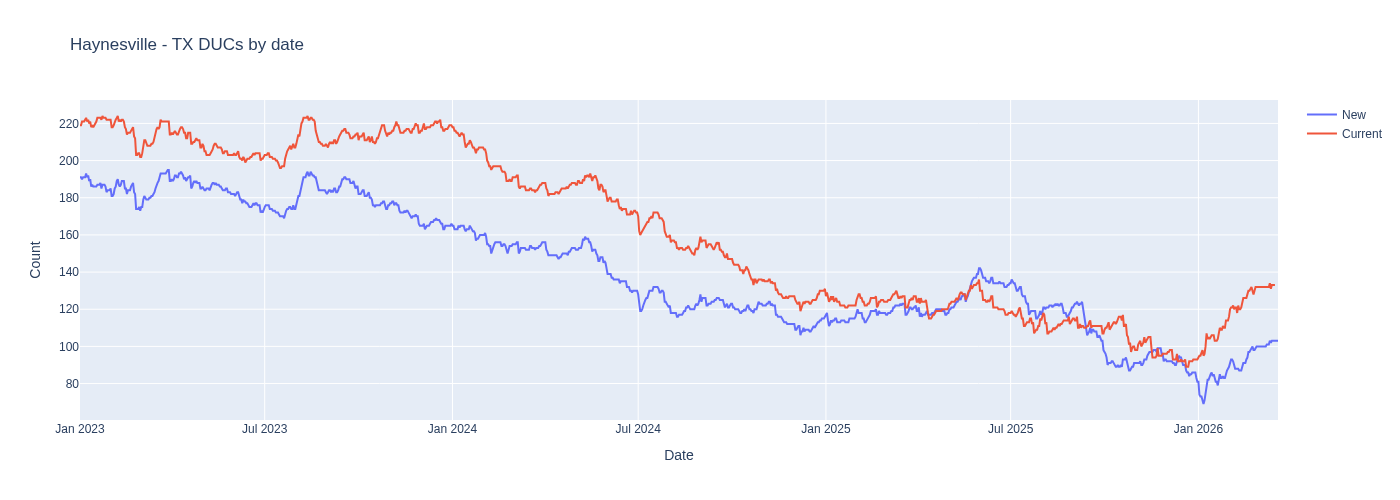
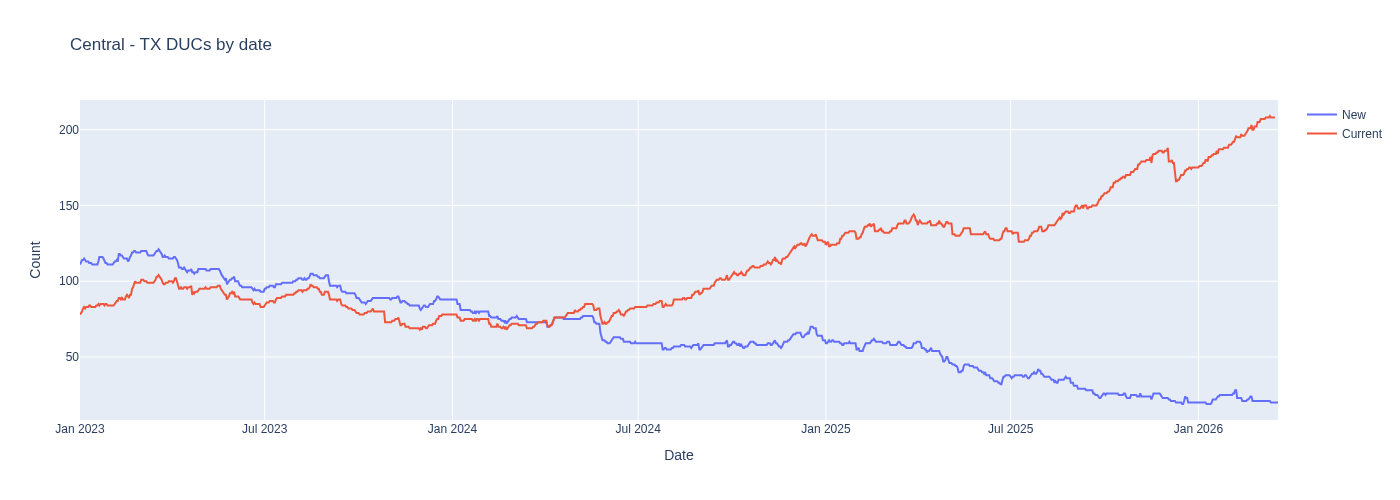
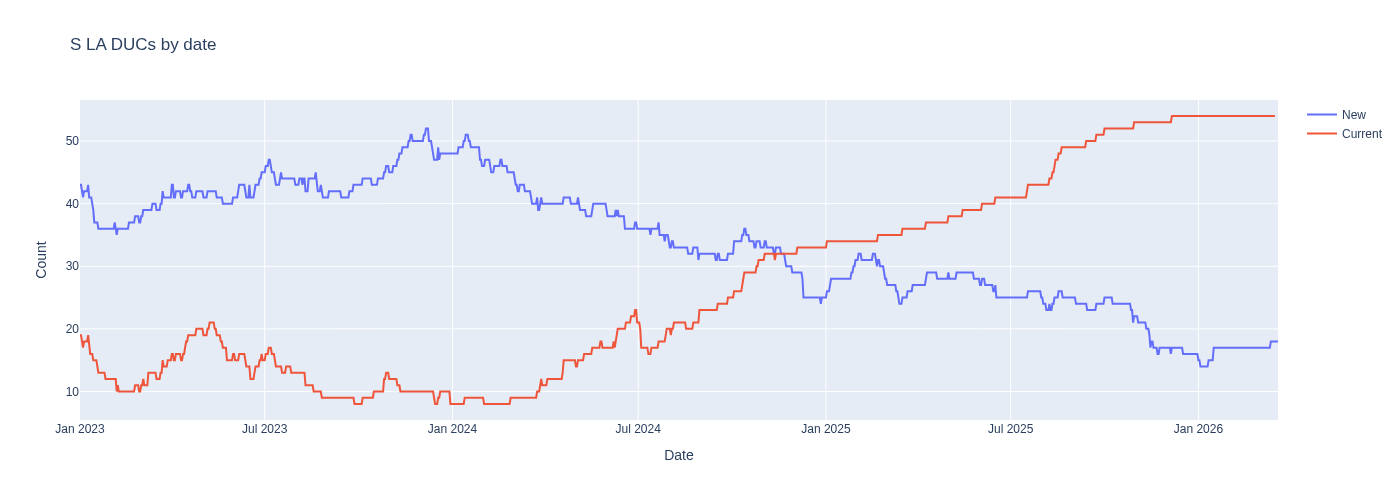
Central TX, North and South LA, Oklahoma:
These regions are where our vendor's well trajectory classification was wrong (or missing) in a wholesale manner, with substantial non-horizontal wells entering the DUC count, so their removal changes the DUC count profile significantly, and is primarily responsible for the more-steep decline in the L48 overall DUC counts in the last year. The new trajectory in Central TX also better fits the activity we've seen. (For OK, this is a more-recent effect.)
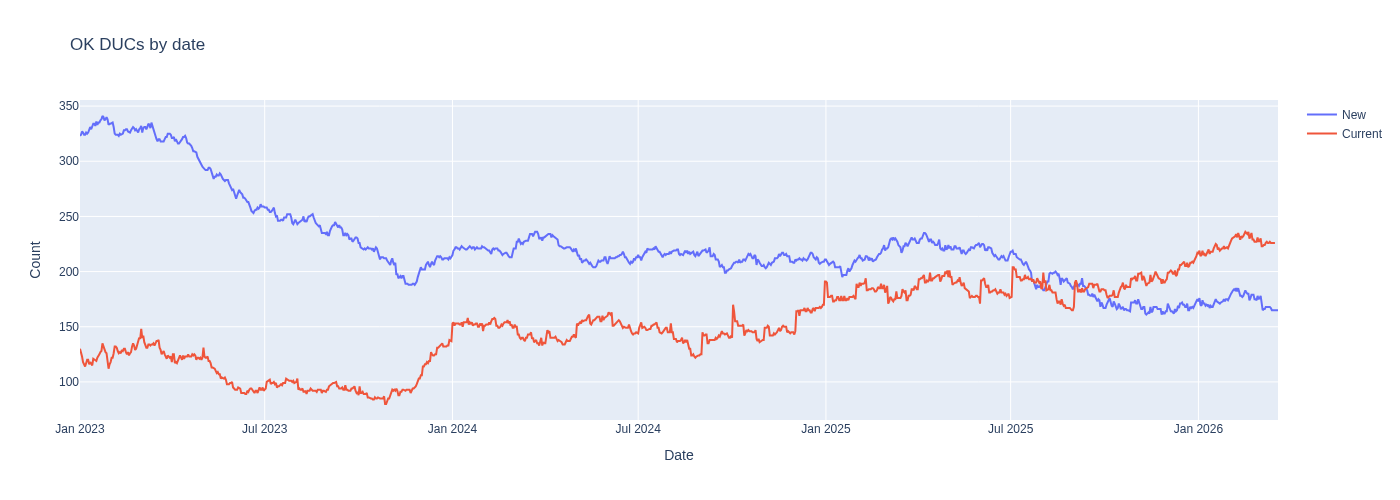
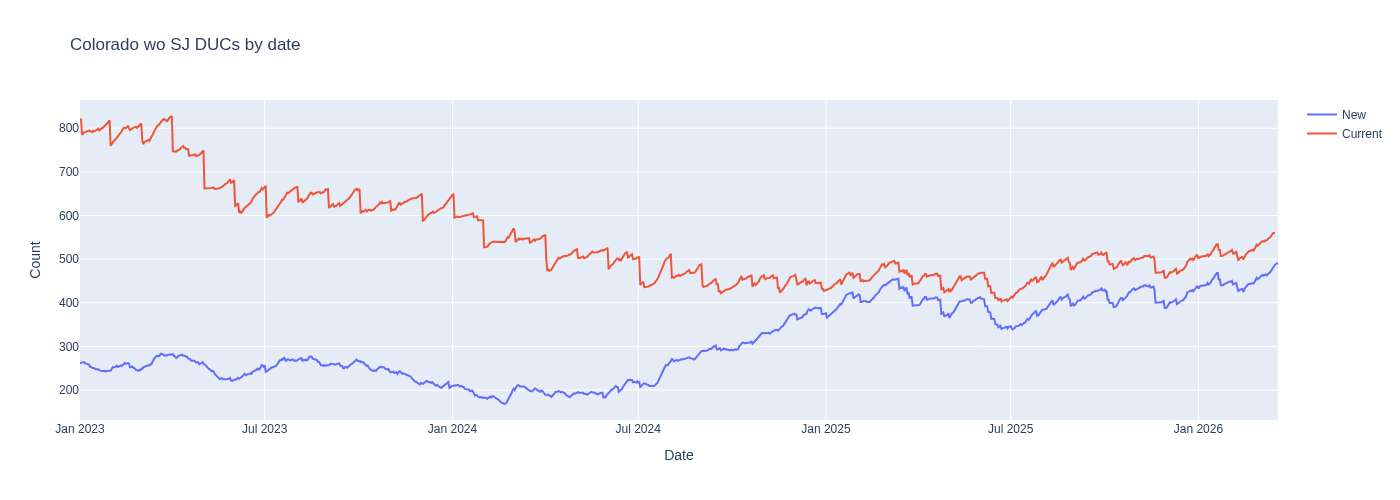
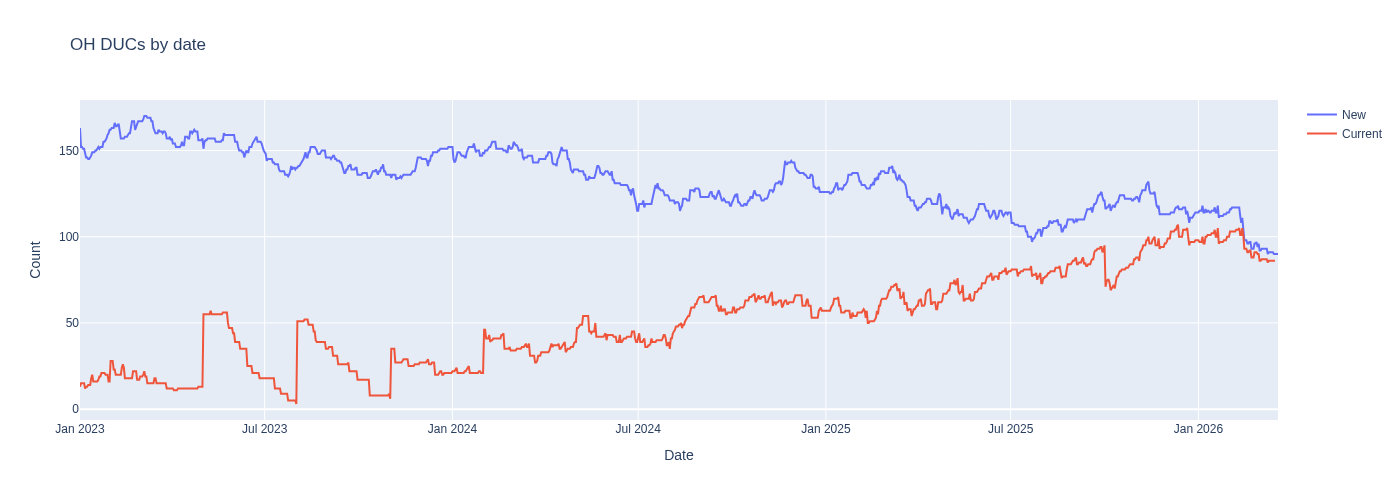
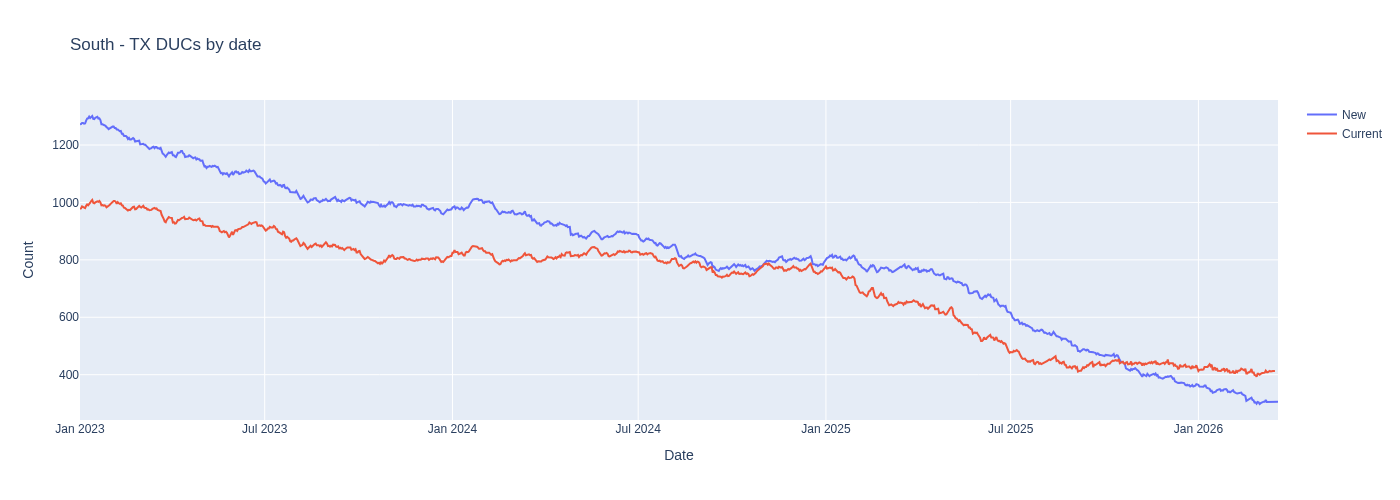
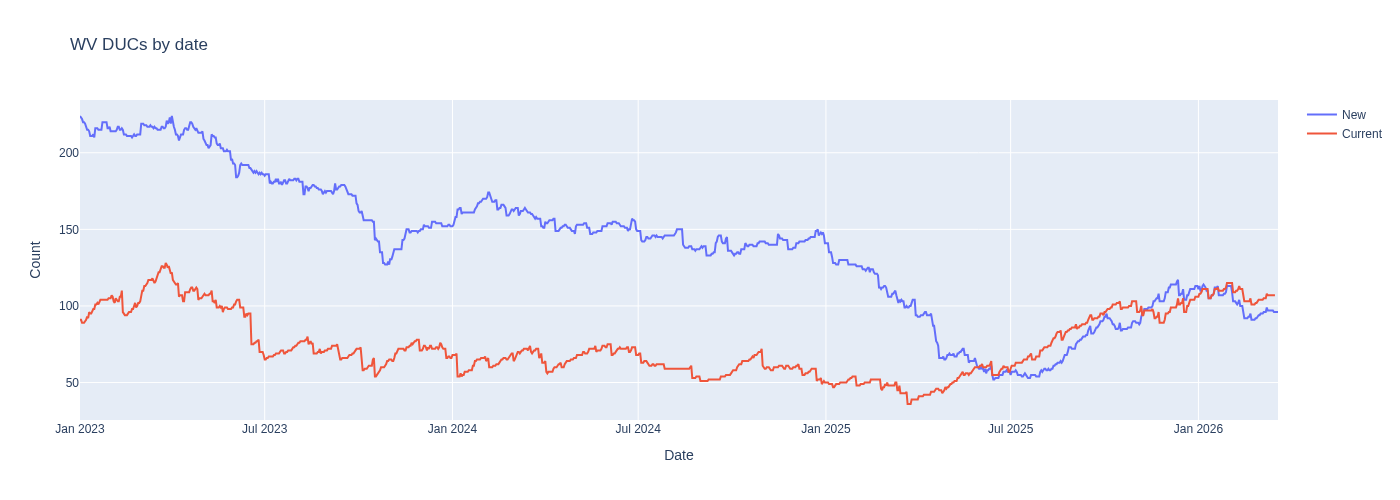
Colorado, Ohio, Oklahoma, South TX, West Virginia:
Most if not all of the difference between the old and new counts in the past in these areas are down to our vendor having substantially different spud and/or completion dates than the state is currently reporting. In very few cases was this substantial, but a few days or weeks difference on hundreds of wells can greatly change counts. This almost exclusively affects history, with the time past dependent on how recently the state in question makes data available. (It is these issues which started us down this road in the first place.)
Permian New Mexico:
There is one other issue in this region that does change the recent trajectory, though the current DUC count is almost identical. A defect in our sources of well location data has resulted in us missing about 1% of rigs/wells (they were all committing the same mistake of believing the well location as published on the NM state website - 99% are correct, but about 1% are very much not - one needs to parse the actual permit application get the correct location). We have traced all of these mis-located wells, and we are confident that we didn't miss any pads - they were additional wells on existing pads - so we captured the activity, but didn't properly assign spud or completion dates to those wells, until the state data/frac focus data came in. This added wells that weren't being tracked, adding to DUCs in the past. As part of this process, we also have corrected a bug that didn't properly prioritize Frac Focus data for completion dates. In most cases this was little different from our satellite data, but in the case of Permian NM, it was for many wells - and that resulted in shorter DUC times at the beginning of 2025, and therefore lower DUC counts - or in this case, a faster-declining DUC count. 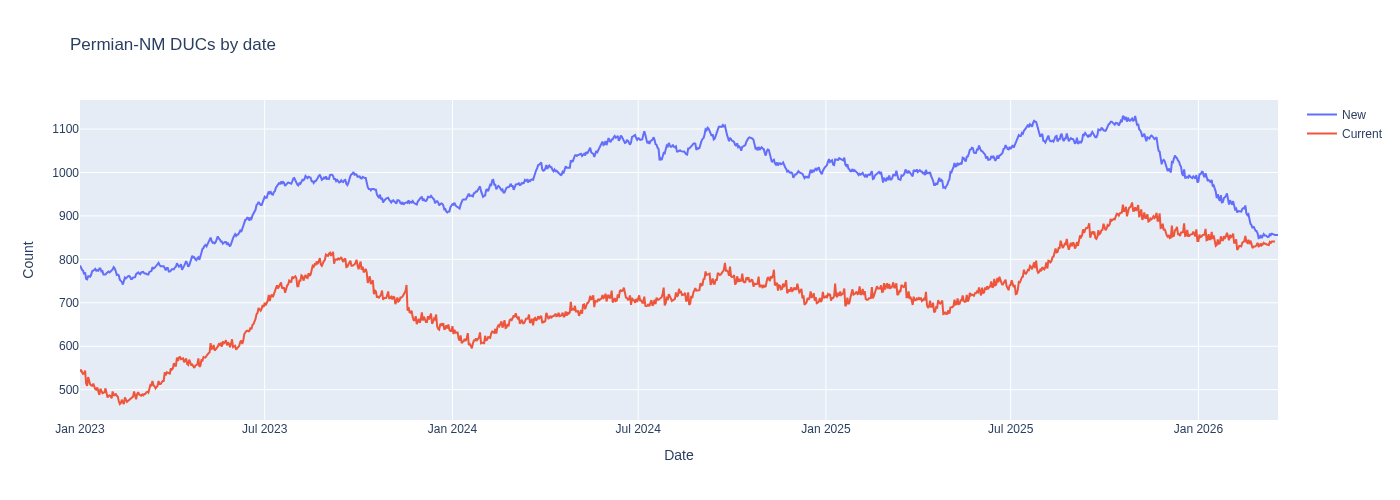
What Does it Mean for You?
For most users, this will be largely invisible. The fundamentals have not changed, and trajectories that really matter haven't changed substantially.
Where you will see differences is in certain subregions and in historical DUC counts. Those changes are not noise — they reflect more complete well classifications, better detection of vertical, injection, and P&A wells, and a fairer historical aging methodology.
Stepping back, this is exactly why we undertook this effort. We are moving more of the data collection and validation process in-house so we can control quality at the source, reconcile discrepancies faster, and improve historical accuracy when states revise their data. The DUC updates are simply the most visible outcome of that work.
Hyperion is not static. We continuously refine both our data inputs and our algorithms so that what you see reflects reality as closely as possible.
As usual, reach out to support@synmax.com with any questions.